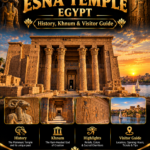

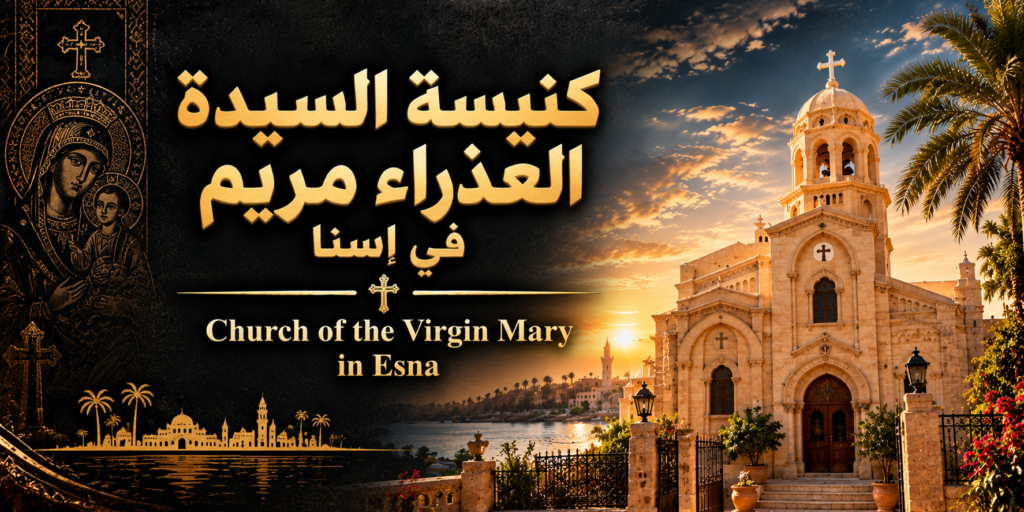

Church of the Virgin Mary in Esna Coptic Heritage, History & Visitor Guide 2026/2027
When travelers think of Esna, they often imagine the magnificent Temple of Khnum, its towering columns, and its beautifully restored astronomical ceiling. Yet this historic town, located south of Luxor, has much more to offer.
Beyond its ancient Egyptian monuments, Esna is home to a rich cultural landscape shaped by centuries of religious traditions, local craftsmanship, commerce, and community life.
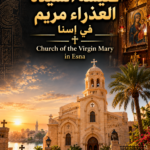
Among the town's Christian landmarks is the Church of the Virgin Mary in Esna, a place associated with the Coptic Christian heritage of Upper Egypt.
Exploring Esna's churches alongside its temples and historic markets offers visitors a broader understanding of the town's diverse history.
In this guide, Trust Way Travel introduces the Christian heritage of Esna, the religious significance of the Virgin Mary, the architectural traditions of Coptic churches, and practical considerations for visitors.
Table of Contents
- Where Is the Church of the Virgin Mary in Esna?
- The History of Christianity in Upper Egypt
- Why Is the Virgin Mary Important in Coptic Christianity?
- Coptic Architecture: What Makes Egyptian Churches Unique?
- The Role of Churches in the Daily Life of Esna
- Religious Art and Symbolism in Coptic Churches
- The Church of the Virgin Mary and the Religious Diversity of Esna
- Places to Visit Near the Church of the Virgin Mary in Esna
- How to Visit the Church of the Virgin Mary in Esna
- Best Time to Visit Esna
- How to Get to Esna from Luxor
- How Much Time Should You Spend in Esna?
- Why Include Esna in a Luxor Cultural Tour?
- Frequently Asked Questions About the Church of the Virgin Mary in Esna
Where Is the Church of the Virgin Mary in Esna?
The Church of the Virgin Mary is associated with the city of Esna in Luxor Governorate, Upper Egypt.
Esna lies on the western bank of the Nile, south of Luxor, and is known for its historic town center and the Temple of Khnum.
The city's religious and architectural heritage reflects different periods of Egyptian history, from ancient Egyptian civilization to Christian and Islamic traditions.
Visitors interested in exploring the church should confirm its precise location, official name, and current access arrangements with a local guide or church representative before traveling.
This is particularly important because several Egyptian churches share the dedication to the Virgin Mary.
The History of Christianity in Upper Egypt
Christianity became established in Egypt during the Roman period and gradually developed into one of the country's major religious traditions.
Upper Egypt played an important role in the growth of Christian communities, monastic life, and Coptic religious culture.
Over the centuries, churches and monasteries became centers of worship, education, artistic expression, and community life.
The region preserves numerous examples of Christian heritage, including religious buildings, manuscripts, icons, and traditions passed down through generations.
The Christian history of Esna forms part of this wider Upper Egyptian story.
However, the foundation date and architectural development of a particular church should be established through reliable local or ecclesiastical documentation rather than inferred from the general history of Christianity in the region.
Why Is the Virgin Mary Important in Coptic Christianity?
The Virgin Mary, also known as Saint Mary or the Theotokos, holds a central place in Coptic Orthodox religious tradition.
She is honored as the mother of Jesus Christ and is celebrated in prayers, hymns, icons, and church festivals.
Many Egyptian churches are dedicated to her, reflecting the importance of Marian devotion in Egyptian Christian life.
Within Coptic tradition, the Virgin Mary is associated with faith, humility, compassion, and spiritual protection.
Her image is frequently represented in religious art, particularly in icons depicting Mary holding the infant Jesus.
A visit to a church dedicated to the Virgin Mary can offer an opportunity to understand these traditions and their continuing significance to worshippers.
Coptic Architecture: What Makes Egyptian Churches Unique?
Coptic church architecture developed over many centuries, combining local Egyptian building traditions with influences from the wider Christian world.
Architectural features vary considerably according to the building's age, location, denomination, and restoration history.
1. The Sanctuary
The sanctuary is the sacred area associated with the altar and the celebration of the liturgy.
In many Coptic Orthodox churches, it is separated from the main worship space by an iconostasis.
2. The Iconostasis
An iconostasis is a screen or partition decorated with religious images and sometimes intricate woodwork.
It traditionally separates the sanctuary from the nave.
3. Religious Icons
Icons depict Christ, the Virgin Mary, saints, angels, and important events in Christian tradition.
They serve a devotional purpose and are an important part of Coptic religious art.
4. Domes and Vaults
Some Egyptian churches feature domes, vaulted ceilings, or other architectural forms influenced by regional building practices.
5. Stone and Woodwork
Historic churches may contain carved stone, wooden doors, screens, and decorative elements that reflect local craftsmanship.
These are general characteristics of Coptic architecture and should not be presented as verified features of the Church of the Virgin Mary in Esna without an on-site architectural survey.
The Role of Churches in the Daily Life of Esna
Churches are more than historic structures. For local Christian communities, they remain important places of worship and social connection.
Religious services, celebrations, and community gatherings help preserve traditions across generations.
In towns such as Esna, religious heritage exists alongside everyday commercial and social life.
This relationship between sacred spaces and living communities is an essential part of understanding the town.
Visitors should therefore approach churches not simply as tourist attractions, but as active religious spaces deserving respect.
Religious Art and Symbolism in Coptic Churches
Coptic Christian art uses a rich visual language to communicate religious stories and beliefs.
Common themes include:
- The Virgin Mary and the infant Jesus.
- Jesus Christ and the apostles.
- Angels and saints.
- Biblical scenes.
- The cross and other Christian symbols.
- Decorative geometric and floral patterns.
Colors, gestures, and arrangements within icons often carry symbolic meaning.
The style of Coptic icons is especially recognizable for its expressive figures and strong emphasis on spiritual meaning.
Studying these artworks helps visitors appreciate the relationship between Egyptian religious history and artistic traditions.
The Church of the Virgin Mary and the Religious Diversity of Esna
One of Esna's most interesting characteristics is the coexistence of landmarks associated with different historical periods.
The Temple of Khnum represents ancient Egyptian religious traditions, particularly those reflected in the surviving Ptolemaic and Roman-period structure.
Christian churches reflect the history and continuing presence of Christian communities.
Historic markets and commercial buildings, including the El-Gedawy Wakala, reveal additional layers of the town's social and economic development.
Together, these places illustrate how Esna evolved across centuries while maintaining its importance as a Nile Valley settlement.
Places to Visit Near the Church of the Virgin Mary in Esna
Temple of Khnum
The Temple of Khnum is Esna's best-known archaeological attraction.
Its surviving hypostyle hall contains monumental columns, elaborate hieroglyphic inscriptions, and a remarkable astronomical ceiling.
Conservation and cleaning work has revealed vibrant colors and intricate decorative details.
El-Gedawy Wakala
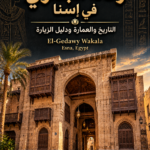
El-Gedawy Wakala is a historic commercial building associated with Esna's trading heritage.
It provides insight into the role of merchants, storage facilities, and traditional commercial architecture.
Esna's Historic Qaisariya Market
The Qaisariya area reflects the town's commercial traditions and historic urban character.
Exploring the market offers a different perspective on daily life in Esna.
Traditional Craft Workshops
Esna has a history of local crafts and production activities.
Visitors may be able to learn about traditional crafts through locally arranged experiences, subject to availability.
The Nile River
The Nile remains central to Esna's landscape and history.
A walk along accessible riverside areas can provide an opportunity to enjoy the town's atmosphere.
How to Visit the Church of the Virgin Mary in Esna
Because the church is a religious site, access may depend on services, celebrations, security arrangements, and permission from church authorities.
Before planning your visit:
- Confirm the church's official name and address.
- Check whether visitors are currently admitted.
- Ask about appropriate visiting times.
- Respect worshippers and religious activities.
- Dress modestly.
- Request permission before taking photographs.
- Avoid entering restricted areas.
- Follow instructions provided by church representatives.
These considerations are particularly important when visiting smaller community churches that do not operate as regular tourist attractions.
Best Time to Visit Esna
The cooler months, generally from October to March, are often the most comfortable for sightseeing in Esna.
During this period, daytime temperatures are usually more suitable for walking through the historic town and visiting archaeological attractions.
Summer visits are also possible, but travelers should plan around the heat and carry sufficient drinking water.
For church visits, the most suitable time depends on local access arrangements rather than the tourist season alone.
How to Get to Esna from Luxor
Esna is located south of Luxor and can be reached by road.
Travel time depends on the departure point, traffic, and the selected route.
The town is also associated with Nile cruise itineraries, although cruise schedules and shore excursions vary by operator.
Travelers planning to explore Esna's historic center should allow time for the Temple of Khnum, the market area, and other heritage sites.
A church visit should be included only after confirming that access is permitted.
How Much Time Should You Spend in Esna?
A short visit to Esna may focus on the Temple of Khnum.
However, travelers interested in the town's broader heritage should consider allowing several hours to explore its historic streets, markets, and architectural landmarks.
If a church visit is arranged, the time required will depend on the church's availability and any scheduled religious activities.
For a more rewarding experience, consider exploring Esna with a knowledgeable local guide who can explain the relationship between the town's different historical periods.
Why Include Esna in a Luxor Cultural Tour?
Luxor is internationally famous for its temples and royal tombs, but nearby towns such as Esna reveal additional aspects of Egyptian history.
Including Esna in a cultural itinerary allows travelers to explore:
- Ancient Egyptian religion at the Temple of Khnum.
- Historic trade and commerce at El-Gedawy Wakala.
- Traditional markets in the Qaisariya district.
- Local craft heritage.
- Christian and Islamic cultural traditions.
- Everyday life in an Upper Egyptian Nile town.
This combination makes Esna particularly appealing to travelers who enjoy history, architecture, photography, and cultural discovery.
Frequently Asked Questions About the Church of the Virgin Mary in Esna
Where is the Church of the Virgin Mary in Esna?
It is associated with Esna in Luxor Governorate, Upper Egypt. Visitors should confirm the exact church and address before traveling.
Is the Church of the Virgin Mary a Coptic church?
Churches dedicated to the Virgin Mary are common within Egyptian Coptic Christian traditions. The denomination and official status of the specific Esna church should be confirmed locally.
How old is the Church of the Virgin Mary in Esna?
A verified foundation date for the specific church has not been established in this guide. Its age should not be assumed from the broader history of Christianity in Upper Egypt.
Can tourists visit the church?
Access depends on current arrangements and permission from the responsible church authorities.
What should visitors wear?
Modest clothing is recommended when visiting churches and other active religious sites.
Can visitors take photographs?
Photography rules vary. Always request permission before photographing interiors, worshippers, or religious activities.
What other attractions can I visit in Esna?
The Temple of Khnum, El-Gedawy Wakala, the Qaisariya market, and other historic areas are among Esna's cultural attractions.
Can Esna be included in a Luxor tour?
Yes. Esna can be included in cultural itineraries from Luxor, depending on the selected program.
Does Trust Way Travel organize Luxor and Esna tours?
Trust Way Travel offers Luxor and Esna travel programs. Travelers can inquire about the included attractions and the possibility of arranging additional heritage visits.
Explore the Cultural Heritage of Esna with Trust Way Travel
Esna is a destination where different chapters of Egyptian history meet.
From the ancient Temple of Khnum to historic markets, traditional architecture, and Christian religious heritage, the town offers an opportunity to discover Egypt beyond its most famous monuments.
The Church of the Virgin Mary represents a subject of interest for travelers exploring Esna's Christian traditions, although its specific historical details and visitor arrangements should be confirmed before publication or travel.
With Trust Way Travel, you can discover Luxor and Esna through thoughtfully planned cultural experiences that highlight the region's history, architecture, and local traditions.
Discover a different side of Upper Egypt with Trust Way Travel.
Official website: traveltrustway.com
Trust Way Travel – Your Way To Luxury