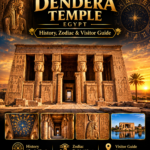


Dendera Temple in Egypt 2026/2027 History, Hathor Temple & Complete Visitor Guide
Hidden among the remarkable archaeological treasures of Upper Egypt, the Dendera Temple Complex is one of the country's most impressive ancient religious sites.
Located near the city of Qena, north of Luxor, Dendera is especially famous for the magnificent Temple of Hathor, its beautifully preserved ceilings, detailed astronomical decorations, and extraordinary architectural features.
Unlike some of Egypt's more frequently visited monuments, Dendera offers travelers an opportunity to explore an ancient temple complex while discovering fascinating details about Egyptian religion, art, and astronomy.
Whether you are planning a cultural holiday in Luxor or exploring lesser-known attractions in Upper Egypt, the Temple of Dendera deserves a place on your travel itinerary.
In this complete guide, Trust Way Travel introduces the history of Dendera Temple, its most important attractions, the famous Dendera Zodiac, practical visiting tips, and ways to include the site in your Egypt travel plans.
Table of Contents
- Where Is Dendera Temple Located?
- What Is Dendera Famous For?
- Who Built the Temple of Hathor?
- Who Was Hathor?
- The Great Hypostyle Hall
- The Famous Dendera Zodiac
- Astronomical Ceilings
- The Crypts of Dendera
- The Rooftop Chapels
- Other Attractions in the Complex
- Dendera vs. Karnak
- Visiting Dendera from Luxor
- Best Time to Visit
- Essential Visiting Tips
- Explore with Trust Way Travel
- Frequently Asked Questions
- Discover Dendera
1. Where Is Dendera Temple Located?
The Dendera Temple Complex is located near Qena in Upper Egypt, approximately 60 kilometers north of Luxor.
The site stands on the west bank of the Nile, within an area that was an important religious center in ancient Egypt.
Dendera can be visited as a day excursion from Luxor, depending on transportation arrangements and available time.
Travelers should confirm the route, journey duration, and current opening hours before departure.
2. What Is Dendera Temple Famous For?
Dendera is best known for its exceptionally preserved Temple of Hathor.
Some of the site's most remarkable features include:
- Monumental columns with Hathor-shaped capitals.
- Beautifully decorated ceilings.
- Astronomical and religious scenes.
- Detailed wall carvings.
- Ancient crypts and ritual chambers.
- Rooftop chapels.
- The famous Dendera Zodiac.
- A sacred lake and other remains within the complex.
The quality of the surviving decorations makes Dendera particularly appealing to travelers interested in ancient Egyptian art and architecture.
3. Who Built the Temple of Hathor at Dendera?
The present Temple of Hathor was largely constructed during the late Ptolemaic period, with additional decoration and construction continuing under Roman rule.
Although the surviving main temple belongs mainly to these later periods, Dendera was a religious site long before the current structure was built.
The temple's architecture demonstrates how traditional Egyptian religious practices continued during the Ptolemaic and Roman eras.
4. Who Was Hathor in Ancient Egyptian Religion?
Hathor was one of the most important goddesses in ancient Egyptian religion.
She was associated with several aspects of life, including:
- Music and celebration.
- Love and beauty.
- Motherhood and fertility.
- Joy and dance.
- Protection and the afterlife.
Hathor was frequently represented as a woman wearing a solar disk between cow horns or with features associated with a cow.
At Dendera, her worship formed the center of the temple's religious activities.
5. The Great Hypostyle Hall
One of the most impressive spaces in the Temple of Hathor is its monumental hypostyle hall.
The hall contains massive columns topped with capitals featuring the face of Hathor.
Its ceiling is covered with remarkable religious and astronomical decorations.
Visitors can observe beautifully preserved scenes featuring celestial imagery, divine figures, and symbolic representations of the cosmos.
The hall is among the main reasons Dendera is considered one of Egypt's most visually spectacular temples.
6. The Famous Dendera Zodiac
The Dendera Zodiac is one of the most famous astronomical artworks associated with ancient Egypt.
The original circular zodiac relief was discovered in a rooftop chapel of the Temple of Hathor.
It depicts a complex arrangement of celestial figures, zodiac signs, and astronomical symbols.
The original relief is now displayed at the Louvre Museum in Paris.
A replica can be seen at Dendera.
The zodiac is especially important for understanding the interaction between Egyptian astronomical traditions and influences from the wider Mediterranean world during the Ptolemaic period.
7. Astronomical Ceilings and Ancient Egyptian Symbolism
The ceilings of Dendera are famous for their detailed astronomical scenes.
These decorations include representations of stars, divine figures, celestial cycles, and religious symbolism.
They reflect the importance of astronomy and cosmic order in ancient Egyptian religious thought.
However, the temple's astronomical imagery should be understood within its historical and religious context rather than as evidence of modern scientific theories.
8. The Crypts of Dendera Temple
The Temple of Hathor contains a series of crypts associated with religious objects and rituals.
Some of these chambers feature elaborate reliefs and inscriptions.
Among the most discussed images are the so-called Dendera light reliefs.
These carvings are generally interpreted by Egyptologists as religious and mythological representations, rather than depictions of modern electrical technology.
Access to certain chambers may be restricted or subject to additional ticket requirements.
9. The Rooftop Chapels
The temple's rooftop areas contain chapels associated with important religious ceremonies.
These spaces provide insight into the ritual functions of the temple and its astronomical symbolism.
Access to the roof or particular chapels may vary depending on site regulations.
Visitors should follow official guidance and avoid entering restricted areas.
10. Other Attractions Inside the Dendera Temple Complex
Although the Temple of Hathor is the main attraction, the wider complex includes additional archaeological features.
Sacred Lake
The sacred lake was associated with purification rituals performed within the temple precinct.
Birth Houses
The complex contains structures known as mammisis, or birth houses, which were associated with divine birth traditions.
Temple of Isis
The archaeological area also includes remains associated with the worship of Isis.
Together, these structures help illustrate the religious importance of Dendera across different historical periods.
11. Dendera Temple vs. Karnak Temple
Both Dendera and Karnak are important religious sites in Upper Egypt, but they offer different experiences.
Dendera Temple
Dendera is particularly famous for its preserved ceilings, Hathor columns, astronomical decorations, and detailed reliefs.
Karnak Temple
Karnak is known for its enormous scale, monumental pylons, vast courtyards, and extraordinary Great Hypostyle Hall.
Visiting both temples provides a broader understanding of ancient Egyptian religious architecture.
12. Can You Visit Dendera Temple from Luxor?
Yes. Dendera is a popular cultural excursion from Luxor.
Travelers can arrange transportation to the site and return to Luxor after the visit.
A guided tour can be particularly useful for understanding the temple's religious scenes and astronomical symbolism.
The excursion may also be combined with other attractions depending on the available time and travel arrangements.
13. Best Time to Visit Dendera Temple
The period from October to March is generally comfortable for sightseeing in Upper Egypt, with milder temperatures than the summer months.
Early morning visits can be especially pleasant.
During summer, visitors should be prepared for high temperatures and strong sunlight.
Always confirm the site's opening hours before traveling.
14. Essential Tips for Visiting Dendera Temple
Before visiting Dendera:
- 1. Wear comfortable walking shoes.
- 2. Carry drinking water.
- 3. Use sunscreen and a hat.
- 4. Check current opening hours.
- 5. Confirm ticket requirements.
- 6. Ask whether special areas require additional access.
- 7. Consider hiring a qualified Egyptologist guide.
- 8. Follow photography regulations.
- 9. Avoid touching ancient reliefs.
- 10. Respect restricted areas and archaeological preservation rules.
15. Explore Dendera and Upper Egypt with Trust Way Travel
Trust Way Travel helps visitors discover the history and culture of Upper Egypt through a variety of travel experiences.
Travelers can inquire about:
- Luxor sightseeing tours.
- Ancient Egyptian temple visits.
- Cultural excursions in Upper Egypt.
- Combined Luxor and Aswan itineraries.
- Nile cruise holidays.
- Optional visits to archaeological attractions such as Dendera, subject to arrangements.
The availability of Dendera excursions and their inclusions should be confirmed before booking.
Frequently Asked Questions About Dendera Temple
Where is Dendera Temple located?
Dendera is located near Qena, approximately 60 kilometers north of Luxor in Upper Egypt.
Who built Dendera Temple?
The surviving Temple of Hathor was largely built during the late Ptolemaic period, with additions and decorations under Roman rule.
What goddess was worshipped at Dendera?
The main temple was dedicated to Hathor, a major ancient Egyptian goddess associated with music, love, joy, and motherhood.
What is the Dendera Zodiac?
It is a famous circular astronomical relief originally located in a rooftop chapel at Dendera. The original is now in the Louvre Museum in Paris.
Can you visit Dendera from Luxor?
Yes. Dendera can be visited as a day excursion from Luxor with suitable transportation arrangements.
Is Dendera Temple worth visiting?
Yes, particularly for travelers interested in ancient Egyptian art, architecture, religion, and astronomical symbolism.
What is the best time to visit Dendera?
October through March generally offers more comfortable sightseeing weather than the summer months.
Can Trust Way Travel arrange a Dendera excursion?
Travelers can inquire about adding Dendera to a suitable Upper Egypt itinerary, subject to availability and arrangements.
Discover Dendera Temple with Trust Way Travel
The Temple of Hathor at Dendera is one of Upper Egypt's most fascinating archaeological treasures.
From its monumental columns to its extraordinary astronomical ceilings, the site offers a remarkable journey into ancient Egyptian religion and artistic traditions.
Whether you're planning a Luxor holiday or a wider Upper Egypt adventure, Dendera can add an unforgettable cultural experience to your trip.
Explore the wonders of ancient Egypt with Trust Way Travel.
Official website: traveltrustway.com
Trust Way Travel – Your Way To Luxury