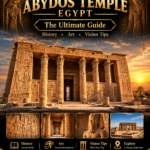


Abydos Temple in Egypt 2026/2027 History, Temple of Seti I & Complete Visitor Guide
Egypt is home to some of the world's most extraordinary archaeological treasures, but not all of its remarkable temples are found in Luxor or Aswan.
One of the most fascinating historical destinations in Upper Egypt is Abydos, an ancient sacred city famous for its religious significance, magnificent temple reliefs, and connections to the god Osiris.
The most celebrated monument at Abydos is the Temple of Seti I, an impressive New Kingdom temple known for its beautifully preserved carvings, remarkable architecture, and the famous Abydos King List.
For travelers interested in ancient Egyptian history, mythology, and archaeology, visiting Abydos offers an unforgettable opportunity to explore one of Egypt's most important religious centers.
In this complete travel guide, Trust Way Travel explores the history of Abydos Temple, its most important attractions, the Temple of Seti I, the Osireion, and practical tips for planning your visit.
Table of Contents
- Where Is Abydos Temple Located?
- Why Is Abydos Important?
- Who Built the Temple of Seti I?
- What Makes the Temple Unique?
- The Seven Sanctuaries
- The Abydos King List
- The Osireion
- The Temple of Ramesses II
- Abydos and the Myth of Osiris
- Ancient Royal Tombs
- Abydos vs. Dendera
- Visiting Abydos from Luxor
- Best Time to Visit
- Essential Visiting Tips
- Include Abydos in Your Travel Plans
- Explore with Trust Way Travel
- Frequently Asked Questions
- Discover Abydos
1. Where Is Abydos Temple Located?
Abydos is located near the modern town of El Balyana in Sohag Governorate, Upper Egypt.
The archaeological site lies northwest of Luxor and can be reached by road as part of a planned cultural excursion.
Abydos was one of the most important religious centers of ancient Egypt and remained significant for thousands of years.
Today, visitors travel to Abydos to explore its temples, archaeological remains, and extraordinary historical heritage.
2. Why Is Abydos Important in Ancient Egyptian History?
Abydos was a major religious and ceremonial center throughout ancient Egyptian history.
The site became especially important because of its association with Osiris, the god of the afterlife, resurrection, and regeneration.
Ancient Egyptians believed Abydos had a special connection to the burial and mythology of Osiris.
As a result, many people wished to be commemorated there, and the area became an important destination for religious pilgrimage.
Abydos also contains some of the earliest royal burial sites in Egyptian history.
3. Who Built the Temple of Seti I?
The famous Temple of Seti I was commissioned by Seti I, a pharaoh of Egypt's 19th Dynasty during the New Kingdom.
Construction continued under his son, Ramesses II, who completed and decorated parts of the complex.
The temple was dedicated to several important Egyptian deities and also honored the deceased king.
Its architecture and decoration make it one of the most remarkable surviving temples of ancient Egypt.
4. What Makes the Temple of Seti I Unique?
Unlike many Egyptian temples, the Temple of Seti I has an unusual L-shaped layout.
The complex includes:
- Monumental courtyards.
- Beautifully decorated halls.
- Rows of impressive columns.
- Seven sanctuaries.
- Detailed religious reliefs.
- Royal inscriptions.
- The famous Abydos King List.
The exceptional quality of the carvings is one of the temple's most distinctive features.
Many scenes preserve remarkably fine details, making Abydos particularly appealing to visitors interested in ancient Egyptian art.
5. The Seven Sanctuaries of Abydos Temple
One of the most extraordinary features of the Temple of Seti I is its seven sanctuaries.
These sacred chambers were dedicated to:
- 1. Osiris.
- 2. Isis.
- 3. Horus.
- 4. Amun-Ra.
- 5. Ra-Horakhty.
- 6. Ptah.
- 7. Seti I.
The sanctuaries illustrate the temple's religious importance and the relationship between kingship and divine worship.
Their decorated walls provide valuable insight into ancient Egyptian ceremonies and beliefs.
6. The Famous Abydos King List
The Abydos King List is one of the temple's most important historical features.
It contains a sequence of royal names representing selected rulers of ancient Egypt.
The list appears in a corridor of the Temple of Seti I and is particularly valuable for studying ancient Egyptian chronology.
However, it is not a complete record of every ruler. Some kings were deliberately omitted, reflecting the political and religious choices of the period.
Despite these omissions, the Abydos King List remains a major source for Egyptologists.
7. The Osireion at Abydos
Behind the Temple of Seti I lies the Osireion, an extraordinary ancient structure associated with the cult of Osiris.
The Osireion is known for its massive stone construction and distinctive architectural design.
Its central area is surrounded by enormous stone blocks, creating an atmosphere unlike that of many other Egyptian monuments.
The structure's precise original functions and some aspects of its construction history remain subjects of scholarly discussion.
Visitors should check whether access or viewing is permitted during their visit, as archaeological site regulations may change.
8. The Temple of Ramesses II at Abydos
Another important monument in the area is the Temple of Ramesses II.
Although smaller than the Temple of Seti I, it contains impressive carved scenes and inscriptions.
The temple demonstrates the continued importance of Abydos during the reign of Ramesses II.
For travelers with sufficient time, visiting both temples offers a broader understanding of the site's New Kingdom history.
9. Abydos and the Myth of Osiris
Abydos played a central role in ancient Egyptian beliefs about Osiris.
According to Egyptian mythology, Osiris was killed by his brother Seth and later restored through the actions of Isis.
The story became closely connected with Egyptian ideas about death, rebirth, and eternal life.
Abydos developed into an important center of Osiris worship.
Religious ceremonies and commemorative monuments reflected the hope of sharing in the god's renewal after death.
10. Ancient Royal Tombs at Abydos
Beyond its famous temples, Abydos is also important for its early royal cemeteries.
The Umm el-Qa'ab archaeological area contains tombs associated with Egypt's earliest dynastic rulers.
These discoveries have helped archaeologists understand the emergence of kingship and the development of the ancient Egyptian state.
Not all archaeological areas are open to general visitors, so travelers should follow current site access regulations.
11. Abydos Temple vs. Dendera Temple
Abydos and Dendera are both extraordinary historical attractions in Upper Egypt, but they offer different experiences.
Abydos Temple
Abydos is especially famous for its connection to Osiris, the Temple of Seti I, the Abydos King List, and its finely carved religious scenes.
Dendera Temple
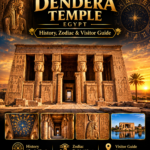
Dendera is known for the Temple of Hathor, impressive Hathor-headed columns, astronomical ceilings, and the famous Dendera Zodiac.
Travelers interested in Egyptian religion and temple architecture may enjoy visiting both sites.
12. Can You Visit Abydos from Luxor?
Yes. Abydos can be visited from Luxor as part of a planned road excursion.
However, it is farther from Luxor than many of the city's main attractions, so travelers should allow sufficient time for transportation and sightseeing.
Depending on the itinerary, a visit may be combined with Dendera Temple.
Travel times vary according to the route, road conditions, and transportation arrangements.
A professionally organized excursion can make the journey more convenient.
13. Best Time to Visit Abydos Temple
The period between October and March generally offers more comfortable temperatures for sightseeing in Upper Egypt.
Early morning visits are particularly suitable during warmer months.
During summer, visitors should prepare for intense heat and strong sunlight.
Before traveling, check the latest opening hours, ticket requirements, and transportation arrangements.
14. Essential Tips for Visiting Abydos
To make the most of your visit:
- 1. Wear comfortable walking shoes.
- 2. Carry sufficient drinking water.
- 3. Use sunscreen and a hat.
- 4. Check current site opening hours.
- 5. Confirm ticket and photography rules.
- 6. Consider visiting with a qualified Egyptologist guide.
- 7. Allow enough time to explore the temple reliefs.
- 8. Respect restricted archaeological areas.
- 9. Avoid touching ancient carvings.
- 10. Arrange transportation in advance.
15. Include Abydos in Your Upper Egypt Travel Plans
Abydos can be an excellent addition to a cultural journey through Upper Egypt.
Visitors may choose to combine it with other important destinations such as:
- Luxor Temple.
- Karnak Temple.
- Valley of the Kings.
- Temple of Hatshepsut.
- Dendera Temple.
- Other historical attractions in Upper Egypt.
The best itinerary depends on your available travel time and interests.
16. Explore Ancient Egypt with Trust Way Travel
At Trust Way Travel, we help travelers discover the historical and cultural treasures of Egypt.
Our travel experiences focus on destinations including Luxor, Aswan, Nubia, and the Nile Valley.
Travelers can inquire about:
- Luxor sightseeing tours.
- Luxor and Aswan travel packages.
- Nile cruise holidays.
- Cultural excursions.
- Ancient Egyptian temple visits.
- Customized Upper Egypt itineraries.
Visits to Abydos and other optional sites depend on the selected itinerary and available arrangements.
Frequently Asked Questions About Abydos Temple
Where is Abydos Temple located?
Abydos is located near El Balyana in Sohag Governorate, Upper Egypt.
Who built Abydos Temple?
The famous Temple of Seti I was commissioned by Pharaoh Seti I, with additional construction and decoration completed under Ramesses II.
What is Abydos famous for?
Abydos is famous for its association with Osiris, the Temple of Seti I, the Abydos King List, and its early royal cemeteries.
What is the Abydos King List?
It is an ancient Egyptian royal list carved inside the Temple of Seti I, containing selected names of Egyptian kings.
What is the Osireion?
The Osireion is a monumental ancient structure located behind the Temple of Seti I and associated with Osiris.
Can you visit Abydos from Luxor?
Yes. Abydos can be visited on a planned road excursion from Luxor.
Can Abydos and Dendera be visited together?
They can be combined in a suitable itinerary, depending on travel arrangements and available time.
Is Abydos Temple worth visiting?
Yes, especially for travelers interested in ancient Egyptian religion, history, architecture, and archaeology.
Discover Abydos Temple with Trust Way Travel
Abydos is more than an ancient temple complex. It is a destination that reveals some of the deepest religious traditions and earliest chapters of Egyptian civilization.
From the extraordinary Temple of Seti I to the mysterious atmosphere of the Osireion, Abydos offers a memorable experience for anyone fascinated by ancient Egypt.
Plan your next cultural journey through Upper Egypt with Trust Way Travel.
Official website: traveltrustway.com
Trust Way Travel – Your Way To Luxury